

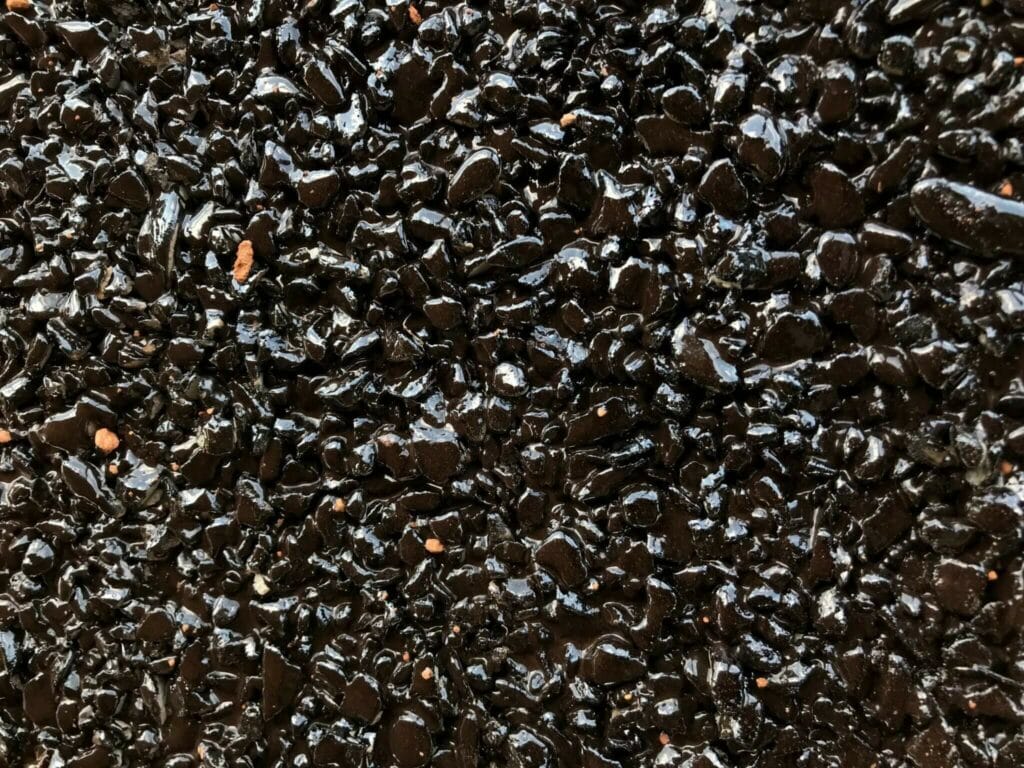

Bitumen Supplier: Grades, Specs and Markets
Pro-Road Global manufactures and exports bitumen in four grade families: penetration, viscosity, PG modified, and cutback and liquid asphalt.
Each family covers specific grade codes.
- Penetration grades: PEN 40/50, PEN 60/70, PEN 85/100, PEN 120/150.
- Viscosity-graded asphalt cement: AC-20, AC-30.
- PG modified binders.
- Cutback and liquid asphalt: MC-30, MC-70, RC-250.
Every grade is made in Pro-Road’s own plants and shipped by container to your discharge port. Sea transit takes 3 days to Colón and 7 days to Callao. Your quote confirms the sailing schedule and door-to-site timing for your order.
Grade families
Which bitumen grades does Pro-Road supply?
Pro-Road supplies penetration grades, viscosity-graded asphalt cement, PG modified binders, and cutback and liquid asphalt products. Grade codes that link through open that grade’s datasheet.
| Grade | Family | Typical use |
|---|---|---|
| PEN 40/50 | Penetration-grade bitumen, hard | Hot-mix asphalt in hot climates and heavy traffic |
| PEN 60/70 | Penetration-grade bitumen, medium | General hot-mix paving, the most widely used grade |
| PEN 85/100 | Penetration-grade bitumen, soft | Hot mix in cooler or high-altitude areas |
| PEN 120/150 | Penetration-grade bitumen, softest | Cold regions and surface treatment binder |
| AC-20 | Asphalt cement, viscosity graded | Hot-mix asphalt where the spec calls for AC grading |
| AC-30 | Asphalt cement, viscosity graded | Hot-mix asphalt in warmer service conditions |
| PG modified | Polymer-modified binder | Heavy-traffic wearing courses |
| MC-30 | Cutback, medium curing | Prime coat on a granular base |
| MC-70 | Cutback, medium curing | Prime coat on a granular base |
| RC-250 | Liquid asphalt, rapid curing | Tack coat and quick-turnaround prime coat |
Which penetration grades does Pro-Road make?
Pro-Road makes four penetration grades, classified by how far a standard needle sinks into the binder. A harder grade takes heat and heavy traffic. A softer grade takes cold and wide temperature swings. Pro-Road also supplies CAP grades for Brazil and CA grades for Chile and Paraguay.
- PEN 40/50 penetration grade bitumen, the hardest of the four
- PEN 60/70 penetration grade bitumen, the most widely specified grade
- PEN 85/100 penetration grade bitumen, for cooler and high-altitude paving
- PEN 120/150 penetration grade bitumen, the softest of the four
How the grading itself works is covered on our penetration grading guide.
Which viscosity grades does Pro-Road make?
Pro-Road makes AC-20 and AC-30 asphalt cement, graded by how the binder flows when hot. Many Latin American and Caribbean specifications call for AC grading. Product pages also cover AC-10, AC-20, AC-30 and AC-40. Our viscosity grading guide explains the system.
What are PG modified binders?
PG modified binders are asphalt cements blended with polymer to widen their service range. They are ordered for heavy-traffic wearing courses and demanding surface layers. The full range sits on our performance grade and polymer modified bitumen page.
What cutback and liquid asphalt products does Pro-Road supply?
Pro-Road supplies MC-30 and MC-70 medium-curing cutbacks and RC-250 rapid-curing liquid asphalt. MC-30 and MC-70 prime a granular base before the first bound layer goes down. RC-250 cures faster and suits tack coats and prime coats needing quick return to traffic. Cutbacks and liquid asphalt stay liquid at ambient temperature, so they ship in 200 kg drums or in an isotainer.
For cold-applied surface work, Pro-Road also supplies bitumen emulsions and sealants.
Are asphalt and asphalt cement the same thing?
Asphalt and asphalt cement are related but different terms. Asphalt is the general word, and it names both the binder and the finished paving mix. Asphalt cement is the binder itself, graded by penetration or viscosity, and it ships solid in big bags.
Datasheets
Where are the bitumen datasheets?
The datasheets are on our technical datasheets page. Each sheet gives the tested properties of one product line. The four penetration grades have their own sheets in English and Spanish.
Every container ships with the technical datasheet for the grade supplied. The commercial invoice, the packing list and the bill of lading travel with it.
Markets
Which markets does Pro-Road supply bitumen to?
Pro-Road supplies bitumen across Latin America and the Caribbean. Each market page carries the discharge ports for that country. It also names the grades its specifications use and the documentation its projects ask for.
| Market | Discharge port | Sea transit |
|---|---|---|
| Caribbean | ||
| Dominican Republic | Caucedo | 2 days |
| Aruba | Oranjestad / Barcadera | 2 days |
| Curaçao | Willemstad | 2 days |
| Bonaire | Kralendijk | 3 days |
| Grenada | St. George’s | 4 days |
| Puerto Rico | San Juan | 5 days |
| Saint Lucia | Vieux Fort | 5 days |
| Dominica | Roseau | 5 days |
| Martinique | Fort-de-France | 5 days |
| Sint Maarten | Philipsburg | 6 days |
| Barbados | Bridgetown | 9 days |
| Jamaica | Kingston Freeport | 15 days |
| Trinidad and Tobago | Point Lisas | 16 days |
| Guyana | Georgetown | 17 days |
| Bahamas | Nassau | 18 days |
| Central America | ||
| Panama | Colón | 3 days |
| Honduras | Puerto Cortés | 4 days |
| Belize | Belize City | 7 days |
| South America | ||
| Peru | Callao | 7 days |
| Brazil (Santos, Paranaguá, Pecém, Manaus) | Porto do Pecém, Ceará | 7 days |
| Bolivia (via Arica, Chile) | Arica | 10 days |
| Chile | San Antonio | 12 days |
| Paraguay | Asunción / Villeta | 28 days |
Brazil, the ABC Islands and the Eastern Caribbean are served through several ports. Each of those market pages lists the full port set with its own figure. Your quote confirms the schedule for your destination port.
Markets outside this table are quoted case by case. Emulsion markets are on the bitumen emulsion supplier markets page.
Which African markets does Pro-Road serve?
Pro-Road supplies asphalt cement and bitumen to 18 African markets. Each country page covers the grades and shipping route for that market.
Nigeria · Ghana · Senegal · Togo · Benin · Burkina Faso · Guinea · Sierra Leone · Cameroon · Angola · Equatorial Guinea · Kenya · Ethiopia · Tanzania · Egypt · Algeria · Tunisia · South Africa
Delivery
How does bitumen ship?
Bitumen ships by container to the discharge port named in your quote. Penetration-grade bitumen and asphalt cement ship in big bags of 1000 to 1300 kg, or in drums. Cutbacks such as MC-70 are liquid at ambient temperature and ship in 200 kg steel drums or in an isotainer.
The minimum order is 24 MT, one full 40-foot container. Big bags are stored on level, drained ground, kept off the surface on pallets or dunnage. They are covered against prolonged sun and rain.
Melting
How do you melt bitumen from big bags?
You melt bitumen by heating the whole bag in a melting unit. Each bag drops in exactly as it arrives from the plant. Indirect heat keeps the binder at the unit wall at a safe, even temperature. Controlled, even heating protects the binder from overheating damage.
Pro-Road’s ASMELT bitumen melter and decanter is built for this process. Bags load onto a receiving platform inside the unit and are lifted by crane. Once melted, the binder is pumped out to a distributor truck or the mixing plant. If you already run a melting unit, the big-bag format loads straight into it.
Why Pro-Road
Why buy bitumen from Pro-Road Global?
You should buy from Pro-Road Global because it controls quality, price and logistics from plant to port:
Commercial terms
What commercial terms does Pro-Road offer?
Pro-Road supplies on CIF or CFR terms to the named discharge port. Your quote states the incoterm, freight and delivery window. Standard payment is in advance, and qualifying buyers can request 50% in advance with 50% against the bill of lading. Approval depends on the company profile and credit record.
Pro-Road accepts third-party inspection by SGS, Bureau Veritas or a similar body at your request. The inspection is quoted and billed separately. Our bitumen price page explains what moves the cost of a container.
FAQ
What do buyers ask most about bitumen supply?
Buyers most often ask about grade choice, datasheets, packing, order size and delivery.
What is the difference between penetration grades and viscosity grades?
The difference is the property each system measures. Penetration grades are classified by how far a standard needle sinks into the binder. Viscosity grades are classified by how the binder flows when hot. Both describe asphalt cement, and your project specification names which system applies.
Which penetration grade should I order?
You should order a harder grade for hot climates and heavy traffic, such as PEN 40/50 or PEN 60/70. Cooler or high-altitude areas call for PEN 85/100 or PEN 120/150. Your quote confirms the grade against your project specification.
Where can I find the datasheet for a grade?
You can find it on our technical datasheets page. The four penetration grades have sheets in English and Spanish. Every container also ships with the datasheet for the grade it carries.
How is bitumen packed for export?
Bitumen is packed in big bags of 1000 to 1300 kg, or in drums. Cutbacks such as MC-70 are liquid at ambient temperature. They ship in 200 kg steel drums or in an isotainer.
What is the minimum order quantity?
The minimum order is 24 MT, one full 40-foot container. A single container can carry one grade or a split load agreed in your quote.
Do you supply MC cutbacks?
Yes, Pro-Road supplies MC-70 cutback. It is used as the prime coat on a granular base. It is liquid at ambient temperature and ships in 200 kg steel drums or in an isotainer.
Which markets do you deliver to?
Pro-Road delivers to Latin American and Caribbean ports, including Colón, Puerto Cortés, San Juan and Callao. Sea transit takes 3 days to Colón and 5 days to San Juan. Your quote confirms the schedule for your destination port.
Can we appoint our own inspector?
Yes. Pro-Road accepts third-party inspection by SGS, Bureau Veritas or a similar body at your request. The inspection is quoted and billed separately.
Do you supply cold mix asphalt?
Yes. Pro-Road produces cold mix for patching and road maintenance. Supply is in container volumes for contractors and municipalities. State your volume and destination port in your request.
Do you supply RC-250 liquid asphalt?
Yes. RC-250 is a rapid-curing cutback used for prime and tack coats. It ships in 200 kg steel drums or in an isotainer.
Ready to order bitumen?
Tell us your grades, quantities, discharge port and delivery timeline through our contact page or email info@proroadglobal.com. Pro-Road Global will respond with availability and freight for your port.
We serve these markets from our operations in Colombia (Ports of Cartagena and Buenaventura), Venezuela (Amuay), Iraq (Umm Qasr, and via the Port of Mersin, Türkiye) and the USA (Port of New Orleans).
Contact us to get to work
We have a talented team, the best materials, tools, and equipment at your disposal.